

The Blue Collar Executive
Why is the road from the field to the C-suite so hard?
If you're like most blue-collar executives, you got here from the field, through a technical degree, or by accident. None of those roads included leadership development, and the bigger your company gets, the more that gap shows.
or book a call

E
THE ENTERPRISE
T
The data backs up what you've probably felt.
of construction establishments have fewer than 20 employees. If you lead a company of 50 or more, you're in rare company.
Why does a big company still run like a small one?
Nearly 1 in 2
I
THE INDIVIDUAL
What you're up against
Three levels, three sets of pressure: the company, the executive team, and you.
How rare is a company like yours?
90%+
CPWR, The Construction Chart Book, 2025
THE EXECUTIVE TEAM
Most platforms are built from small, owner-run companies, and those habits survive the acquisition. Decisions still run through one person, systems stay informal, and leaders stay in the work.
PE add-on deals is at least the platform's fourth acquisition.
Bain & Company, 2024
About Half
as likely to hold a bachelor's degree. 34.7% of construction managers do, compared with 65.2% of financial managers.
Bureau of Labor Statistics, 2023-24
Nearly half
of M&A practitioners cite cultural fit or management integration as a primary reason past deals failed.
Bain & Company, 2023
The Collar Gap
As a platform grows, it brings in corporate leaders from white-collar companies to run finance, HR, and integration. The operators who run the field often feel those leaders don't understand blue-collar work. Both sides tend to call it a corporate culture problem. Most of the time, it comes from two different ways of working, and it sits at the center of every integration.
Fewer than half
of foremen have been trained in communication, quality control, or scheduling.
Construction Industry Institute, via NCCER
All-time high
Employment in services to buildings hit a record in March 2026, through the highest interest rates in more than two decades.
Bureau of Labor Statistics
76
PE deals in HVAC in the first half of 2026, compared with 63 in all of 2025.
PitchBook, 2026
36%
of construction firms have a formal plan for handing off the CEO's responsibilities.
FMI and CFMA, 2024

What did your path to the top leave out?
17% vs. 27%
Blue-collar workers are less likely than other workers to see formal education as the best way to get ahead.
Pew Research Center, 2025
28
studies on blue-collar career development in 11 years. The review excluded supervisors and managers.
Fordjour et al., Human Resource Development Review, 2025
This is the Blue Collar Executive Island: a large, growing sector whose executives the leadership development industry has never visited.
WHEN COMPANIES CALL US
Does any of this
sound familiar?
Most of the calls we get start with one of these.
An acquisition that won't integrate.
The operators who built the company and a new corporate team now share one table. Decision rights are unclear, and the next deal waits on the last one.
A founder who can't step back.
The business was built on one person's skill and judgment. Now it needs an executive team that can run it without them.
Leaders promoted before they're ready.
Growth and retirements are moving people up faster. Each one is learning the job while doing it, and the bench behind them is thin.
THE USUAL FIXES
Why do so many
approaches struggle?
Each one makes sense for a reason. None of them was built for a blue-collar executive team.
Carry it yourself
WHAT IT GETS RIGHT
You know the work, the customers, and the people better than anyone.
WHERE IT FALLS SHORT
Growth stalls at what the people at the top can carry, and your leaders never get the reps to take it on.
Frontline and small-business programs
WHAT IT GETS RIGHT
They cover the basics well: time management, communication, supervision.
WHERE IT FALLS SHORT
They're built for frontline supervisors and owners of small operations. Nothing in them is designed for an executive team leading through other leaders.
Wait and see
WHAT IT GETS RIGHT
No cost up front.
WHERE IT FALLS SHORT
The cost shows up later as a stalled integration, a founder who can't leave, or a key leader who walks.
Hire polished executives from outside
WHAT IT GETS RIGHT
It brings in finance, HR, and integration skills quickly.
WHERE IT FALLS SHORT
Most come from white-collar companies. The operators and the new corporate team can stop trusting each other, and integration slows down.
White-collar executive programs
WHAT IT GETS RIGHT
Proven content and well-run programs.
WHERE IT FALLS SHORT
They're built for knowledge workers. Slide decks, jargon, and classroom days lose a room full of leaders who came up from the field.
WHAT WORKS
So what does work?
Development that sticks with leaders who came up from the field has four things in common.
01
It's built around the real work.
Every idea gets applied to a live problem in the leader's own business. Each leader leaves each session with a specific commitment to act on.
03
It makes ownership clear.
Each leader knows what they own, has the authority to act on it, and is accountable for the result. That's what moves decisions off the top.
02
It's delivered by people who know the field.
Blue-collar executives can tell within minutes whether someone understands their world. We use plain language and explain the reasoning behind every idea.
04
It's measured against numbers you already track.
Key-person retention, turnover, promotion readiness, bid volume, and hit rate get a baseline in the first 90 days and are reviewed at month 6 and month 12.
HOW IT WORKS
How we develop your executive team.
A 12-month program in three phases.
STABILIZE
First 90 days
We start with each leader. Assessments, including the Cleaver 360, DISC, and Working Genius, show how they lead and where they get stuck. Each leader gets clear on what they own and what they can decide. Baselines get set on the numbers you already track.
Enterprise Team Coaching
or book a call
INTEGRATE
Months 3 to 6
Your leaders build the skills their path never gave them: leading through other leaders, delegating, holding people accountable, and running meetings that end in decisions. They practice on live problems between monthly group sessions and one-on-one coaching, and start working as one executive team, including the operators and corporate leaders who now share the table.
ACCELERATE
First 90 days
Leaders take on more: growing their part of the business, developing the next layer, and owning results against the baselines. Sales coaching comes in where it fits. You finish with a plan for next year, owned by your executive team. We start with each leader. Assessments, including the Cleaver 360, DISC, and Working Genius, show how they lead and where they get stuck. Each leader gets clear on what they own and what they can decide. Baselines get set on the numbers you already track.
READY TO TALK?
Already know you want to talk?
Start with a conversation.
Tell us where your company is and where you're trying to take it. We'll tell you honestly whether Cleaver is the right fit.
RESULTS
What this looks like
in practice.
PE-backed commercial HVAC platform, built through acquisition
We worked with the national service leadership team through executive coaching, monthly group and team calls, in-person workshops, and 360 assessments. The service leader moved more time into strategy. Managers shifted from reactive, hands-on operating toward planning and delegation, and the East and West Coast regions began working together more often. The company then asked us to design a high-potential leadership program and brought us into an acquired business to support its leaders through integration.
Employee-owned electrical and low-voltage contractor, client for more than 30 years
Ten branch leaders each completed three assessments and two individual debriefs before a full-day on-site. The team found that no one owned new business development, and the branch committed to a twelve-month growth coaching program. The same model is planned for two more branches.
FOR COMPANIES GROWING THROUGH ACQUISITION
Start before close.
Development that is part of the plan from day one is received as support for the team. Brought in later, after a problem shows up, it is more likely to meet resistance. We can also run leadership due diligence on the people the deal depends on, so you know where the risk sits before you sign.
YOUR COACHES
Who you'll work with.
The Blue Collar Executive practice is led by Todd Stone and Graham Smith.
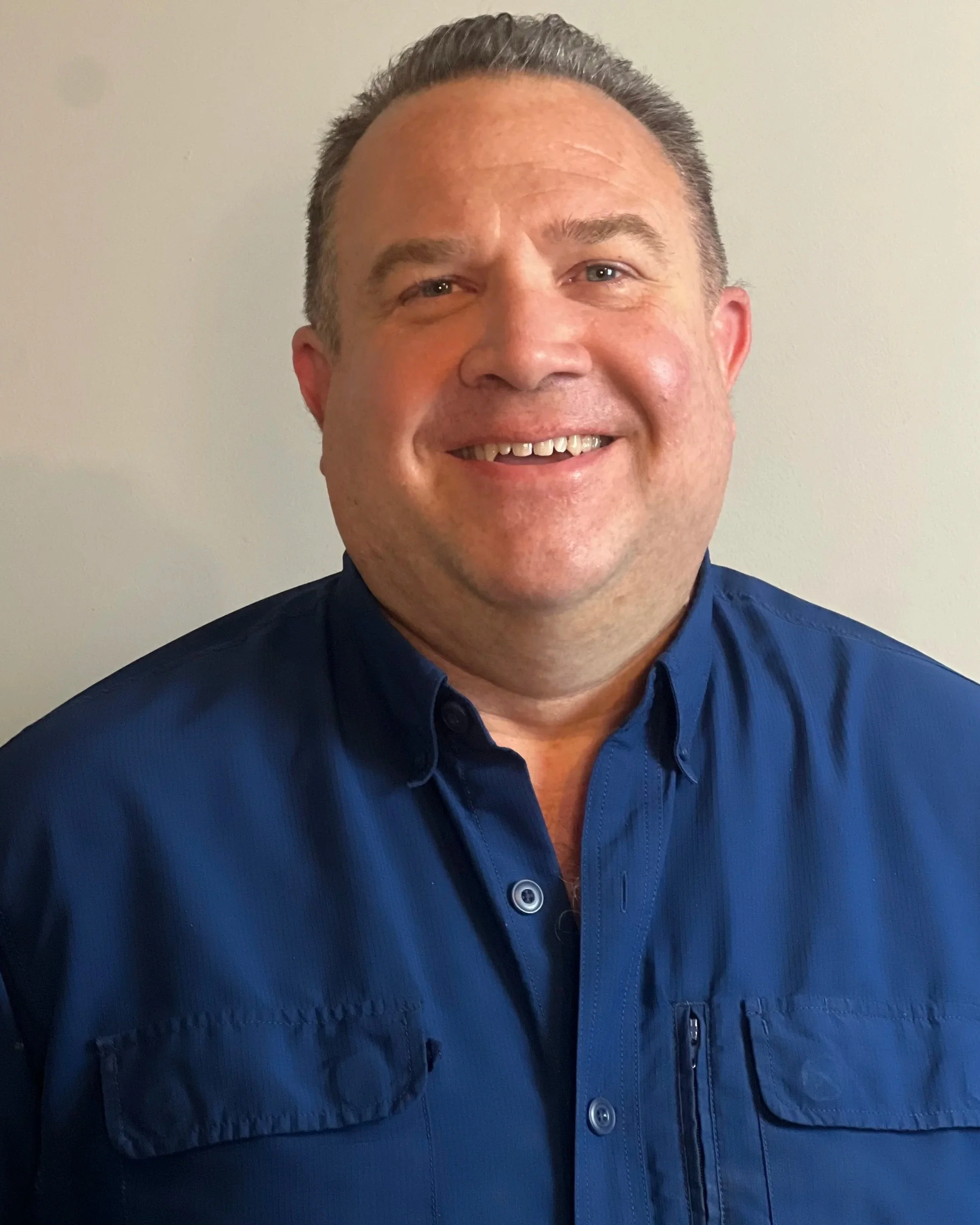
Todd Stone
EXECUTIVE COACH
Todd spent a little over 22 years helping to build and lead True North Outdoor, one of the largest commercial landscape maintenance and snow removal companies in Kansas City, including as its COO. He joined Cleaver in 2023, leads the Blue Collar Executive practice, and built the stabilize, integrate, accelerate framework the program follows.
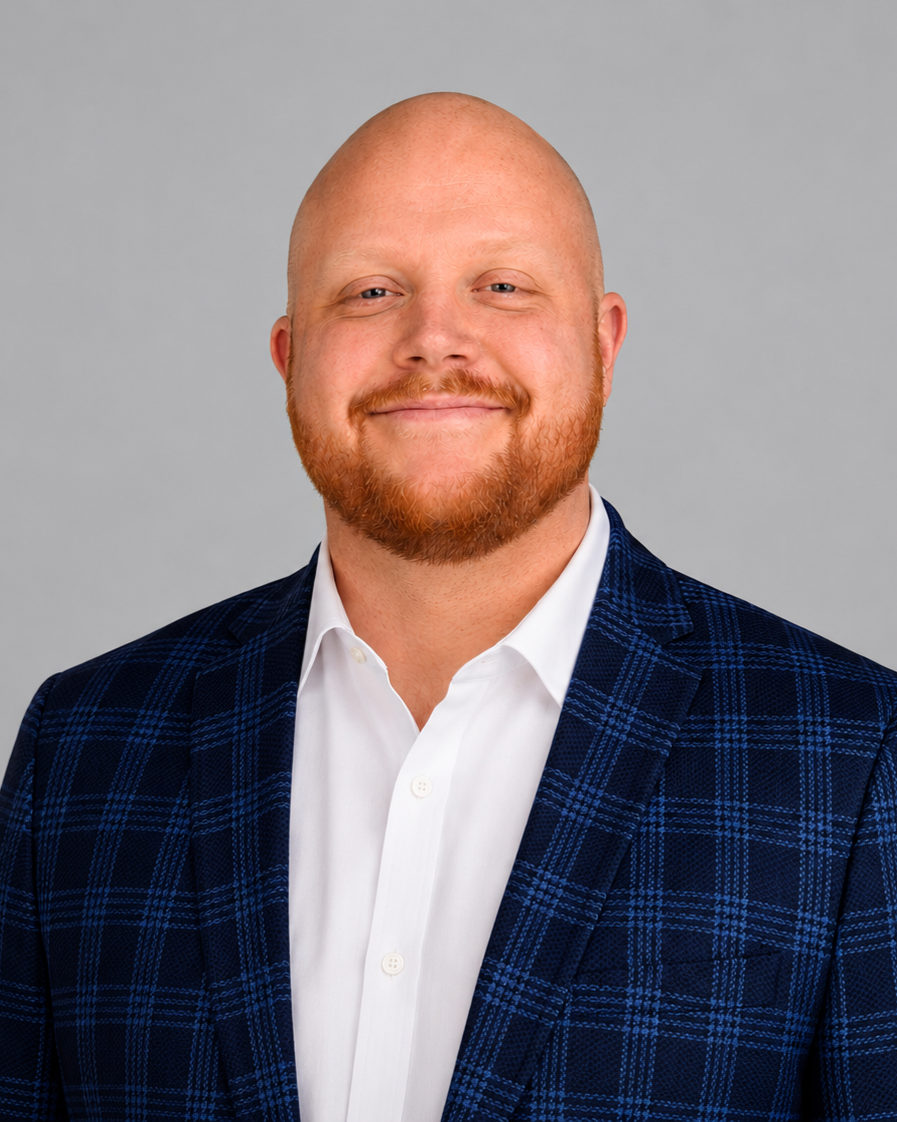
Graham Smith
DIR. OF BUSINESS DEVELOPMENT & LEADERSHIP SOLUTIONS
Graham owns Cleaver's growth strategy and runs the Blue Collar Executive practice. He coaches leadership teams that have a plan and need a partner to execute it, adjust it, and execute again. Before joining Cleaver in 2021, he spent 15 years in leadership development and coaching in the non-profit sector, then moved into sales and sales management at a security systems service company.
70+
Years developing leaders
SPEAKING
ENTERPRISE TEAM COACHING
The Cleaver Company
10,000+
Leaders
Bring this conversation
to your event.
Todd speaks to blue collar executive and investor audiences about the Blue Collar Executive Island, the three roads to the executive table, and what it takes to develop leaders who came up through this world.
1,000+
Teams
FAQ
Common questions.
-
CEOs, COOs, and owners of blue-collar service companies with 50 or more people who have an executive team or are building one. That includes platforms growing through acquisition.
-
That's who it's built for. Sessions are practical and tied to their real decisions, and each leader commits to trying something in the business before the next session. It's coached by people who know the field.
-
Yes. In growing companies, the operators who run the field and the corporate team at headquarters often read each other wrong. We work with both at the same table on decision rights, a shared operating rhythm, and how they work together.
-
Less than you'd think. A monthly group session of about 90 minutes, regular one-on-one coaching, and a couple of in-person workshops over the year. Most of the work happens in the business, between sessions.
-
Executive team engagements typically start around $35K for the first year. The final number depends on how many leaders are involved and which parts of the program you need. We'll give you a clear number after a first conversation.
-
We set baselines in the first 90 days on numbers you already track, like key-person retention, turnover, promotion readiness, bid volume, or hit rate. Then we review them with you at month 6 and month 12.
START HERE
Is growth outrunning
your leaders?
Find out where your leadership team stands. The Leadership Gap Scorecard takes about six minutes and shows where your leaders are strong, where decisions are getting stuck, and what to work on first.
or book a call